Garden Clearance Crouch End: Recycling and Sustainability
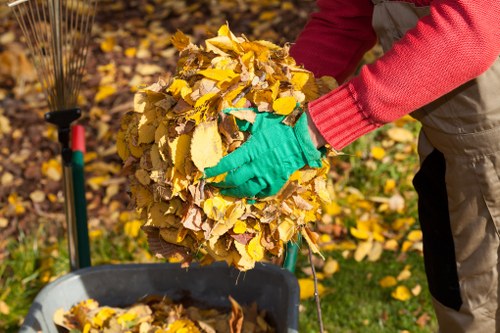 Garden Clearance Crouch End takes a practical, eco-first approach to clearing green spaces, patios, sheds and overgrown plots. Our mission is to protect local green corridors by directing materials to the right reuse and recycling routes rather than landfill. We have set a clear recycling percentage target: to recycle or recover 75% of all collected garden and household waste within the next three years. That target drives every decision from crew training to vehicle choice and partnerships with local environmental organisations.
Our work aligns with the boroughs' approach to waste separation: residents in this part of North London are encouraged to separate food waste, paper and card, glass, plastic and cans, and to use dedicated garden waste collections where available. We complement those municipal schemes by pre-sorting green waste and salvaging reusable items on site so that community recycling streams remain uncontaminated. Efficient on-site separation reduces cross-contamination and increases the volume of material we can redirect to higher-value recycling and reuse.
 To make sure material goes to the best possible destination we work with nearby transfer stations and facilities. Items that can’t be reused locally are transported to North London transfer points operated by regional authorities, including the Edmonton EcoPark and other materials recovery facilities (MRFs) that handle compostable and mixed recyclables. Where appropriate we route timber, soil, brick and masonry to specialist processors so inert materials are crushed or reused for landscaping projects, keeping them out of landfill and supporting circular construction practices.
Local network, transfer stations and charity partnerships
We prioritise reuse before recycling by partnering with charities and community groups that accept furniture, tools, plant pots and working garden kit. These relationships keep useful items in circulation and support local social impact: some items are passed on to community gardens, allotments and housing associations while others go to local charity shops specialising in household goods and furniture reuse. Partnerships with charities are a cornerstone of our sustainable rubbish area strategy.
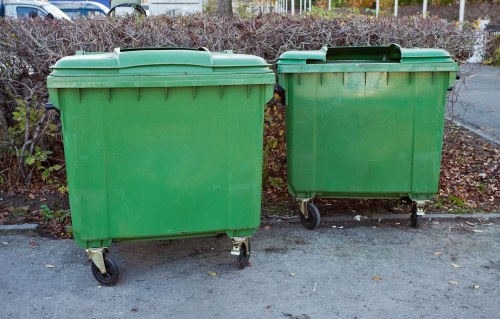 Our partnerships include small, local organisations as well as larger reuse networks. We collaborate with community repair cafes and local reuse charities to divert items that might otherwise be discarded. We also run periodic collection drives for garden-ready soil, plantable compost and usable timber, which enables community groups and schools to benefit directly. The result is a measurable uplift in reuse rates and a stronger local circular economy. Local reuse is better for people and the planet.
To keep logistics low-carbon we operate a fleet that mixes electric vans, plug-in hybrids and efficient Euro-6 vehicles for longer trips. Our low-carbon vans are used for inner-Crouch End pickups and shorter routes, while larger loads are consolidated to reduce trips to transfer stations. We have invested in route planning and driver training to minimise idling, kilometre totals and emissions per tonne of waste handled. These steps are part of a continual push to shrink the carbon footprint of garden clearance across the area.
Operational practices for a sustainable rubbish area
On-site sorting is standard: crews separate green waste, timber, recyclable plastics and metals, reusable items and contaminated materials. Soil and vegetative debris are either taken to local composting facilities or processed for reuse where quality allows. We also maintain a small stock of reclaimed paving and timber that can be sold or donated, turning what would be waste into a resource for local landscaping projects and repair initiatives.
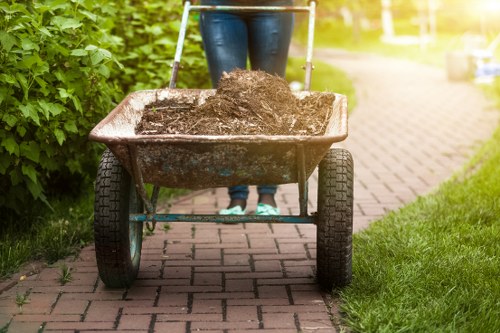 We track progress toward our recycling percentage target through routine audits, weighbridge records and partner receipts from transfer stations. Data helps us identify contamination hotspots and informs targeted training for crews and communications with residents. Our metrics include diversion rate (percentage of material not landfilled), reuse volume, and carbon savings estimates from vehicle efficiencies and avoided raw material production.
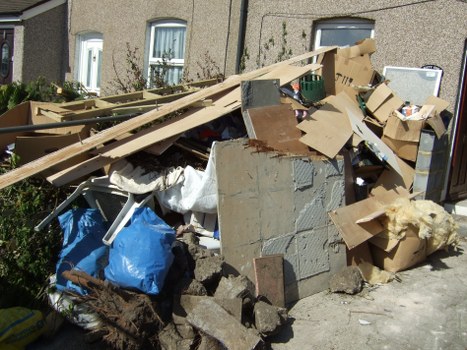 To make our commitments concrete we follow a few core principles:
- Reuse first: offer salvageable items to community groups and charities.
- Recover second: send green and mixed recyclables to appropriate MRFs and composting facilities.
- Reduce last: avoid unnecessary disposal by planning and consolidating removals.
We are transparent about goals and outcomes: recycling targets, partner destinations, and vehicle emissions reductions are all part of our regular internal reporting. By aligning with North London waste networks and borough policies on separated collections, Garden Clearance Crouch End ensures that materials flow into the right reuse, recycling and recovery channels. This systems view—linking crews, charities, transfer stations and residents—creates measurable environmental benefits.
Community engagement remains essential. We encourage residents and local businesses to embrace separation at source and to nominate items for reuse when booking a clearance. We also support local campaigns to increase uptake of paid garden waste collections where the borough offers them, reinforcing municipal systems that complement our own pre-sorting and salvage work. Together, these actions keep more material circulating locally and cut down on carbon-intensive disposal.
Garden clearance in Crouch End can be both effective and gentle on the environment. By targeting a high recycling percentage, working with transfer stations and charities, and investing in low-carbon vans and smarter logistics, we create a practical blueprint for sustainable garden clearances across the borough. Small changes in how waste is handled locally lead to big benefits for neighbourhoods, wildlife and the climate.